Quiet Ocean · Plate 19 of 45
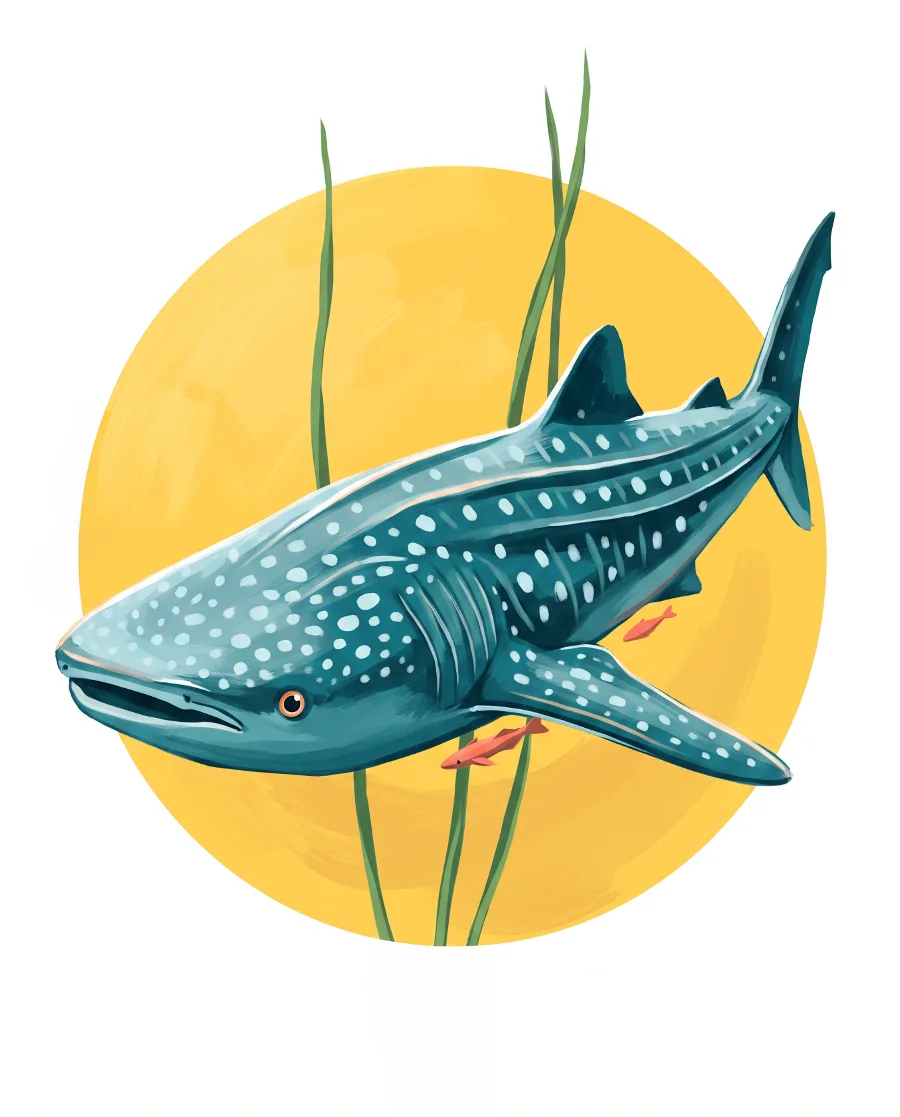
Whale shark color reference
Rhincodon typus
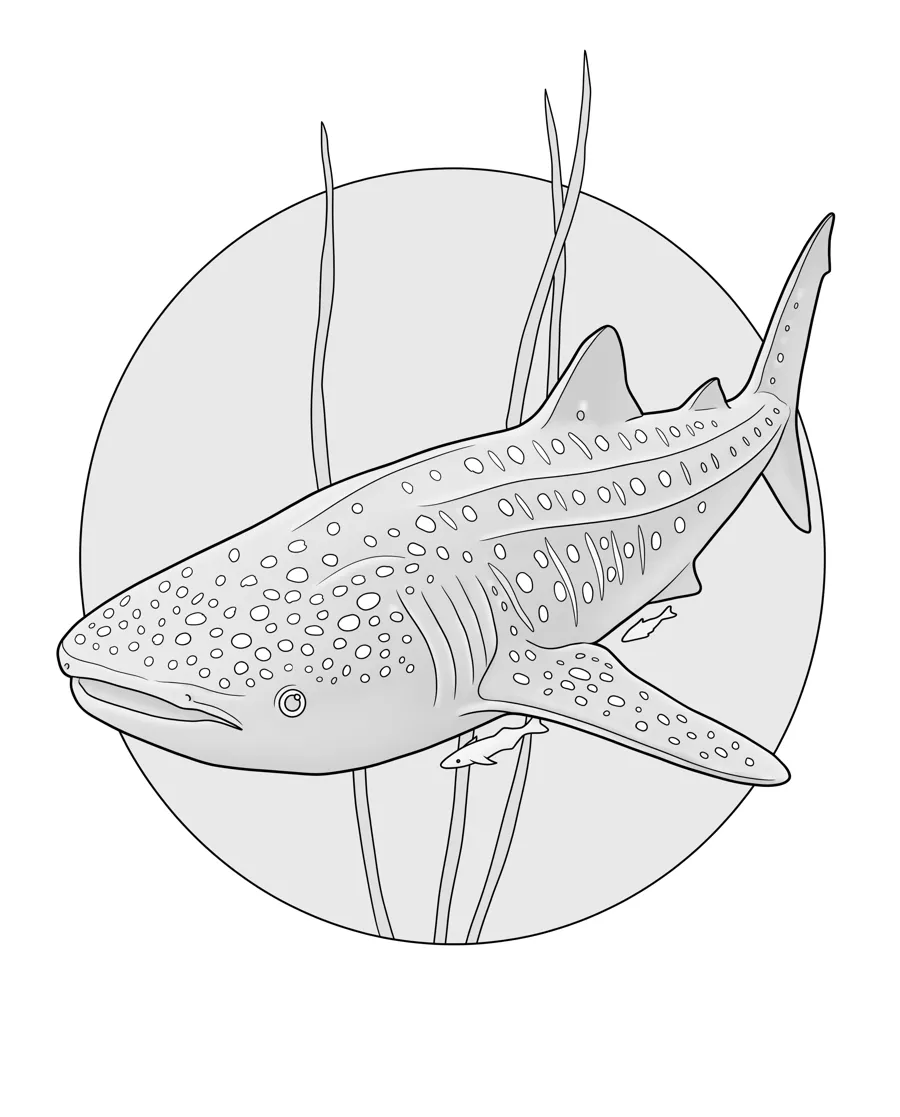
The whale shark is the largest fish in the world. Despite its size it eats plankton and small fish, filtering them from the water. The pattern of white spots on each whale shark is unique, and scientists use it to identify individuals.
Colors to reach for
Color the body a deep blue-gray, add the white spots and pale stripes on top, and fade to a pale belly.
- navy blue
- slate blue
- white
- steel blue
- pale blue
How to color the whale shark, step by step
- Read the gray shading guide first. It already marks where the whale shark is darkest, so the shadows are mapped before you pick up a pencil.
- Lay a light first layer of navy blue and slate blue over the largest areas, with soft pressure and small circles, letting the gray show through.
- Build depth with white and steel blue, going over the gray areas a second and third time until they read as shadow and form.
- Finish with pale blue for the smallest details and highlights, then step back and compare with the color reference above.
Questions about this page
- What colors do I need to color the whale shark?
- Start with navy blue, slate blue, white, steel blue and pale blue. Color the body a deep blue-gray, add the white spots and pale stripes on top, and fade to a pale belly.
- Where is the whale shark in Quiet Ocean?
- It is plate 19 of 45 in Quiet Ocean. Like every Nibfern drawing it is printed on one side of the page, with a light gray shading guide under the lines and a dotted cut line at the spine.
- Can I frame the whale shark page?
- Yes. Cut along the dotted line and trim to the corner marks for a 7 x 9 inch print that fits a standard 8 x 10 frame.
More from Quiet Ocean
 Electric eelQuiet Ocean, plate 21
 NautilusQuiet Ocean, plate 22
 Hermit crabQuiet Ocean, plate 23
 Blue crabQuiet Ocean, plate 24